

Understanding how to select the right planter accessories begins with analyzing your field conditions, crop goals, and equipment capabilities. Optimal planting requires more than just a reliable planter; it demands precise adaptation to changing environments and agronomic needs. Equipment accessories now include advanced tools that enable better seed placement, residue management, and handling of in-field variability. Knowing which tools apply to your specific operation separates successful planting outcomes from costly rework or inconsistent emergence.
Many producers assume one-size-fits-all solutions are sufficient, but planter accessories should reflect the uniqueness of every operation. Choosing the wrong tool can result in poor seed-to-soil contact, excessive residue interference, or uneven planting depths. A deliberate approach helps farmers align planter configurations with their crop management goals and field constraints. Selecting the right accessories allows planting systems to operate with maximum performance under diverse conditions.
Assessing Soil Type, Topography, and Residue Load
Field conditions play a crucial role in determining how planter accessories function under stress, particularly when dealing with challenging soil types. Heavy, wet soils may require hydraulic downforce systems and wide-gauge wheels for consistent planting depth. Sandy soils often benefit from lighter-duty coulters and flexible closing systems to avoid compaction. Matching accessories to soil mechanics preserves structure while ensuring even emergence across each row.
Topography impacts planting depth, row consistency, and implement drift, especially in fields with hills, terraces, or contours. Planter accessories such as parallel linkage kits and row unit stabilizers can prevent row units from bouncing or losing ground contact. Operators working in uneven terrain should consider equipping planters with contour-adjusting technology or floating row cleaners. Accurate seed placement on slopes helps maintain crop uniformity and population targets.
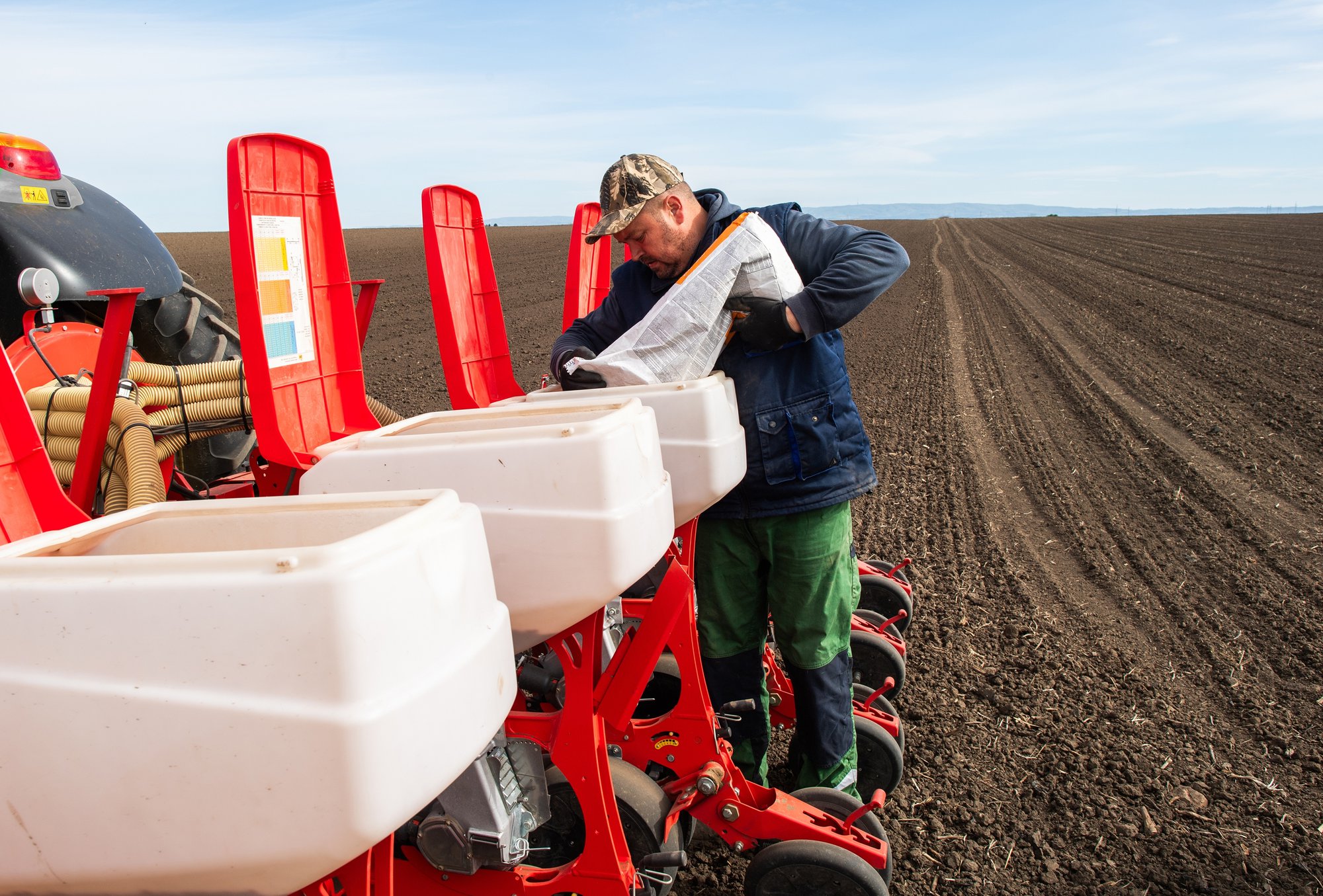
MaterMacc Planters of all types
High-residue environments require specialized accessories to ensure seed furrows remain clean and debris-free. Residue managers, floating row cleaners, and coulters can move corn stalks or cover crops out of the seed path. Operators must fine-tune these components to reduce hair-pinning while preserving valuable soil cover. Making the correct adjustments preserves both planting integrity and soil health benefits from no-till or strip-till systems.
Soil moisture variability adds complexity, making it essential to choose planter accessories with adaptive capabilities. Precision downforce systems that adjust in real-time can maintain consistent pressure even as soil conditions change. Monitoring tools such as smart depth sensors or furrow moisture indicators guide in-field adjustments without stopping the planter. Adapting to soil moisture fluctuations supports rapid, even germination across variable environments.
Matching Planter Accessories to Crop Requirements
Crop-specific needs determine how planter accessories should be configured to support seed type, row spacing, and plant populations. Corn often demands high precision tools such as singulation meters, pneumatic downforce, and dual closing wheels for deep, consistent planting. Soybeans, on the other hand, benefit from narrow rows, variable rate meters, and low-pressure depth settings to reduce emergence variability. Choosing crop-tailored configurations optimizes population and spacing to boost yields.
Seed shape and weight significantly impact meter performance and are crucial when configuring seed plates or disk types. Irregular seed shapes, such as those found in some pulse crops, may require vacuum meters with adjustable singulators. Flat seeds, such as those found in sunflower or treated corn hybrids, need specialized backing plates to avoid doubles or skips. Matching planter accessories to seed characteristics improves singulation and stand establishment.
Row width and spacing flexibility are essential for mixed-crop operations or specialty crop rotations. Adjustable row units, shims, and swappable planter frames provide greater versatility in fields where multiple crops are grown. Many producers switch between 15-inch, 20-inch, and 30-inch rows depending on seed variety and final population targets. Flexible accessory setups accommodate this diversity without requiring reconfiguration of the planter base.
Planting depth consistency is another key factor where accessories like depth control linkages and bright gauge wheels play a significant role. Some crops, such as cotton or canola, require shallow placement, while others, like corn or sorghum, may need deeper furrows. Variable depth settings, driven by in-cab adjustments, allow for precision planting without frequent manual calibration. Ensuring correct seed depth across all soil types reduces emergence variability and promotes early vigor.
Evaluating Technological Compatibility of Planter Accessories
Planter accessories today often include advanced precision farming technologies designed to integrate with GPS, RTK, and implement guidance systems. Incompatible tools create unnecessary headaches during planting and can result in lost data or poor performance. Farmers must ensure that sensors, actuators, and monitors are compatible with their tractors and digital platforms. Upfront validation of technology connections prevents future service issues.
Precision farming tools embedded in planter accessories can include seed firmers with depth sensors, electric drive units, and ISOBUS-ready control modules. Operators benefit from real-time adjustments and performance monitoring when each system communicates effectively through a shared control network. Avoiding brand-specific lock-in allows users to expand capabilities across platforms. Functional compatibility ensures maximum value from advanced planting technologies.
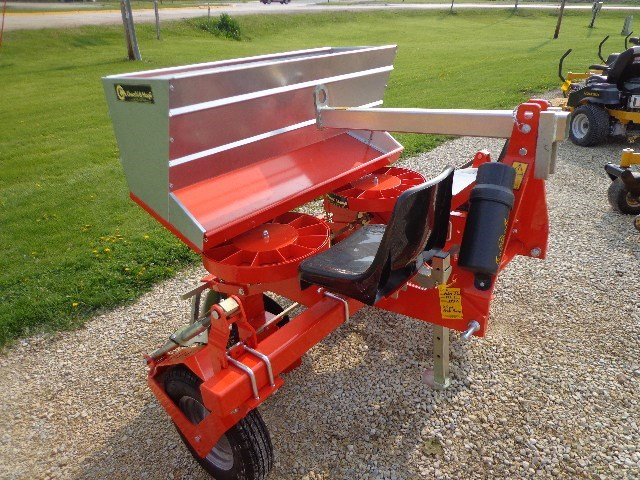
Checchi & Magli two row Potato Planter
Software integration is crucial when data is transferred into cloud systems for later analysis or compliance reporting. Planter accessories that track downforce, seed spacing, and planting speed must export data in usable formats. Compatibility with field mapping software and agronomic analysis platforms increases operational insight. A seamless digital transition from the field to the farm office maximizes the utility of precision tools.
Ease of use remains a practical concern, especially when adjusting accessories during high-pressure planting windows. Farmers should prioritize accessories that allow fast in-field calibration, simple diagnostics, and error-proof operation. Equipment with tool-free adjustment or touchscreen controls reduces downtime when every hour counts. By prioritizing intuitive and efficient accessories, farmers can support consistent planting success during narrow weather windows.
Understanding Durability and Long-Term Serviceability
Durable planter accessories reduce mid-season breakdowns and extend the life of core components. Materials such as hardened steel, high-strength polymers, and corrosion-resistant finishes withstand the abrasive effects of soil and residue. Longevity becomes critical during back-to-back planting days or variable field conditions. Investing in wear-resistant components ensures consistent function across multiple seasons.
Maintenance access and replacement part availability should always factor into the decision-making process. Farmers often need to replace gauge wheels, scrapers, or bushings mid-season without waiting for manufacturer backorders. Selecting planter accessories with local dealership support and stocked inventory avoids unnecessary delays. Dependable parts supply contributes directly to equipment uptime and field efficiency.
Ease of repair is crucial, particularly for owner-operators who handle their service work. Modular planter accessories with bolt-on designs or snap-fit components reduce time spent on repairs. Tools that support easy removal and reinstallation save labor and lower in-season stress. Designing for serviceability boosts long-term equipment performance without sacrificing field speed.
Environmental exposure, such as dust, temperature swings, and moisture, can degrade electronics, seals, and moving parts. Farmers operating in high-clay soils or wet fields should consider sealed components with IP-rated protection. Accessories built for extreme exposure maintain calibration and precision despite harsh conditions. Reliability in real-world environments supports consistent planter operation.
Pick The Right Planter Accessories for Your Farm
Choosing the right planter accessories requires a detailed understanding of your soil conditions, crop needs, and technological capacity. Precision components must align with your planting strategy to ensure uniform emergence, efficient field passes, and long-term equipment value. A thorough evaluation of durability, compatibility, and return on investment (ROI) reveals that each accessory investment directly supports farm profitability. Long-term success begins with the right tools in the furrow.
Visit Windridge Implements for proven planter accessories, precision technology, and expert support across northeastern Iowa. Let our team help you find high-performance equipment tailored to your specific planting goals and field challenges.